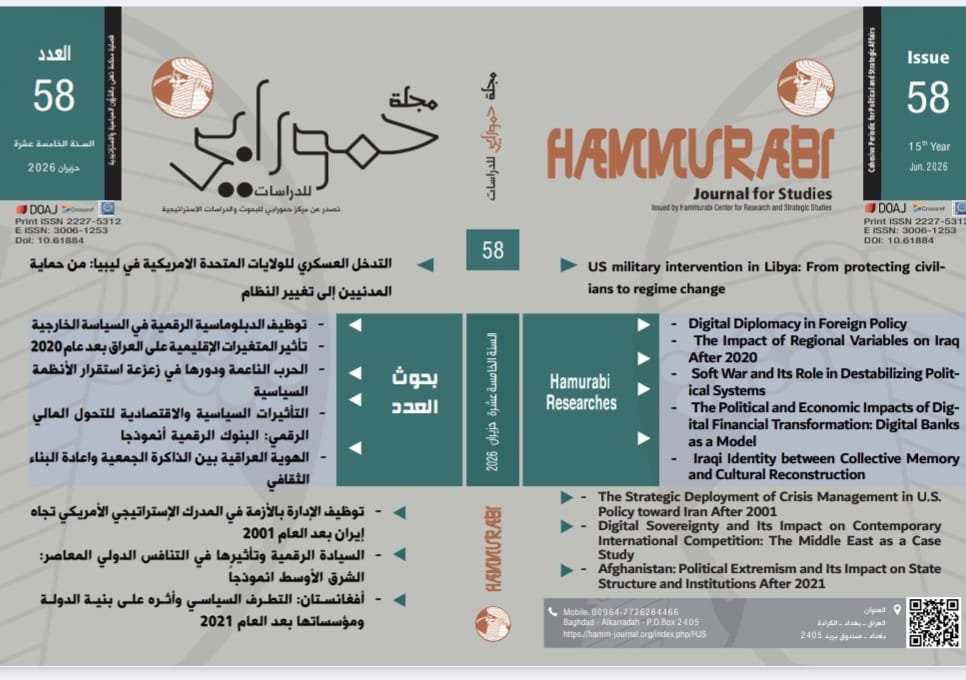
The Strategic Deployment of Crisis Management in U.S. Policy toward Iran After 2001
DOI:
https://doi.org/10.61884/hjs.v14i58.770Abstract
This study examines the concept of "Management by Crisis" as a contemporary paradigm in American strategic thought. It aims to analyze how the United States has institutionalized this concept as a pivotal tool in shaping its strategic perception toward Iran following the events of September 11- 2001, utilizing the Iranian nuclear program crisis as a primary case study. The study is predicated on the hypothesis that U.S. foreign policy does not seek the definitive resolution of Middle Eastern crises, but rather aims to "frame and manage" their trajectories. This approach ensures the sustainability of regional hegemony, safeguards vital interests most notably the security of allies primarily Israel secures energy supplies, and contains international and regional adversaries. The findings suggest that Management by Crisis has evolved into a structural strategic doctrine in U.S. policy toward the region.